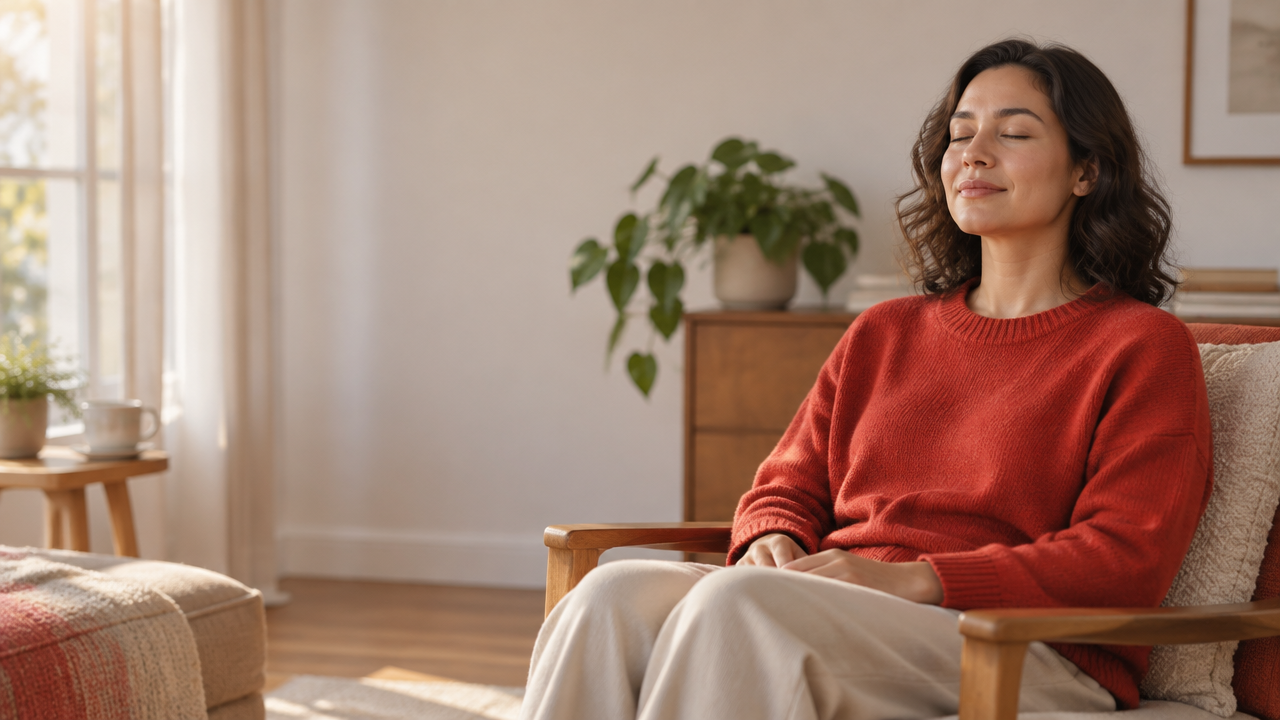
Yoga Nidra is a guided relaxation practice that invites you to rest while following a sequence of simple awareness cues. It can suit beginners and people seeking a quiet pause, but it is not a guaranteed sleep treatment or a shortcut to a particular brain state. Its practical value lies in learning to notice what is happening, rest without pressure, and return to daily choices with greater steadiness.
Key points to know before you begin
- You usually lie down while a guide directs attention through the body, breath, and sometimes imagery.
- The aim is relaxed awareness, not forcing yourself to stay awake or fall asleep.
- Session formats differ, so there is no single required script or duration.
- Research suggests possible benefits, but evidence is still limited and should not replace medical care.
- You can adjust or stop the practice if it feels uncomfortable.
What Yoga Nidra is, and what it is not
Often translated as “yogic sleep,” Yoga Nidra is a structured, guided practice done while resting. The name can be misleading: you may feel drowsy, but the practice does not require you to sleep. Nor does every session reliably place the brain in a specific sleep stage.
A guide may move your attention between body sensations, natural breathing, and mental images. You are not expected to empty your mind. When attention wanders, the practice is simply to notice and return to the next cue. This kind of guided body awareness has points in common with a somatic awareness practice, though the format and tradition can vary.
Think of it as a rehearsal in receiving rest without needing to earn it. That can support a more deliberate response to everyday demands, but the experience is personal, not a promise of transformation after one session.
What happens during a typical session?
A session usually follows a sequence that gives attention something gentle to do while the body rests. The exact order varies by teacher, recording, or tradition, and you can listen without trying to perform each step perfectly.
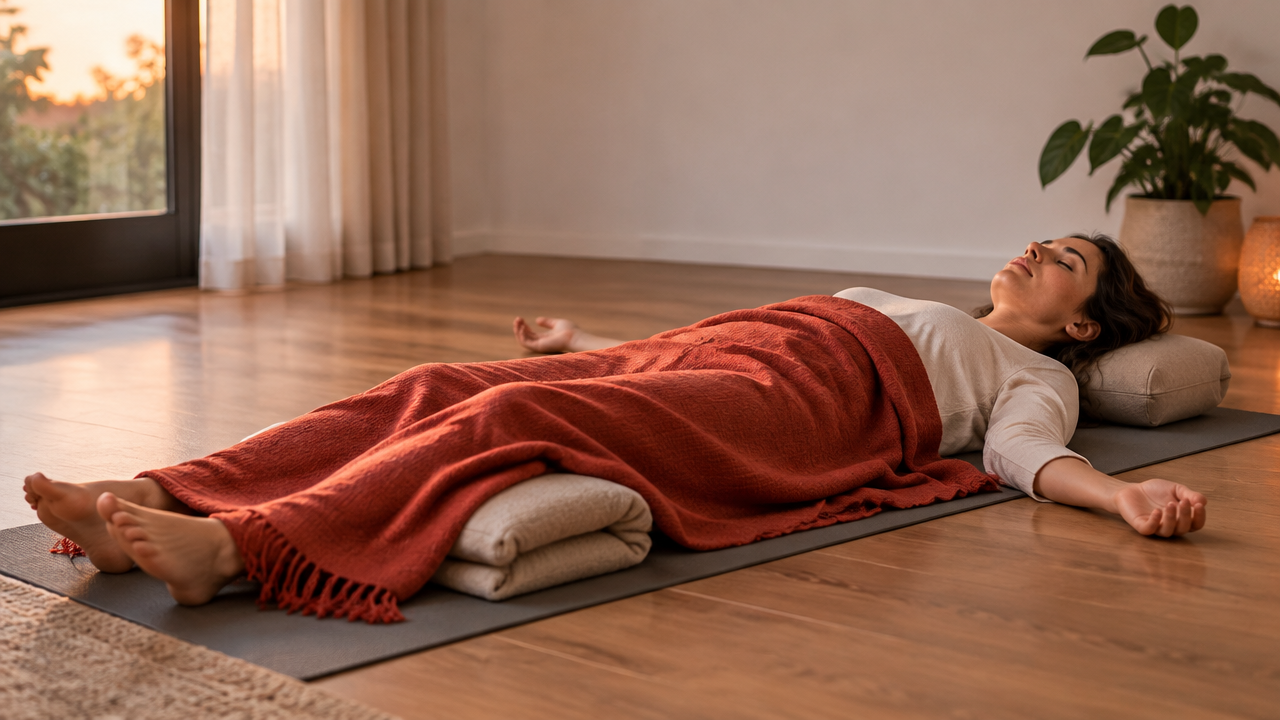
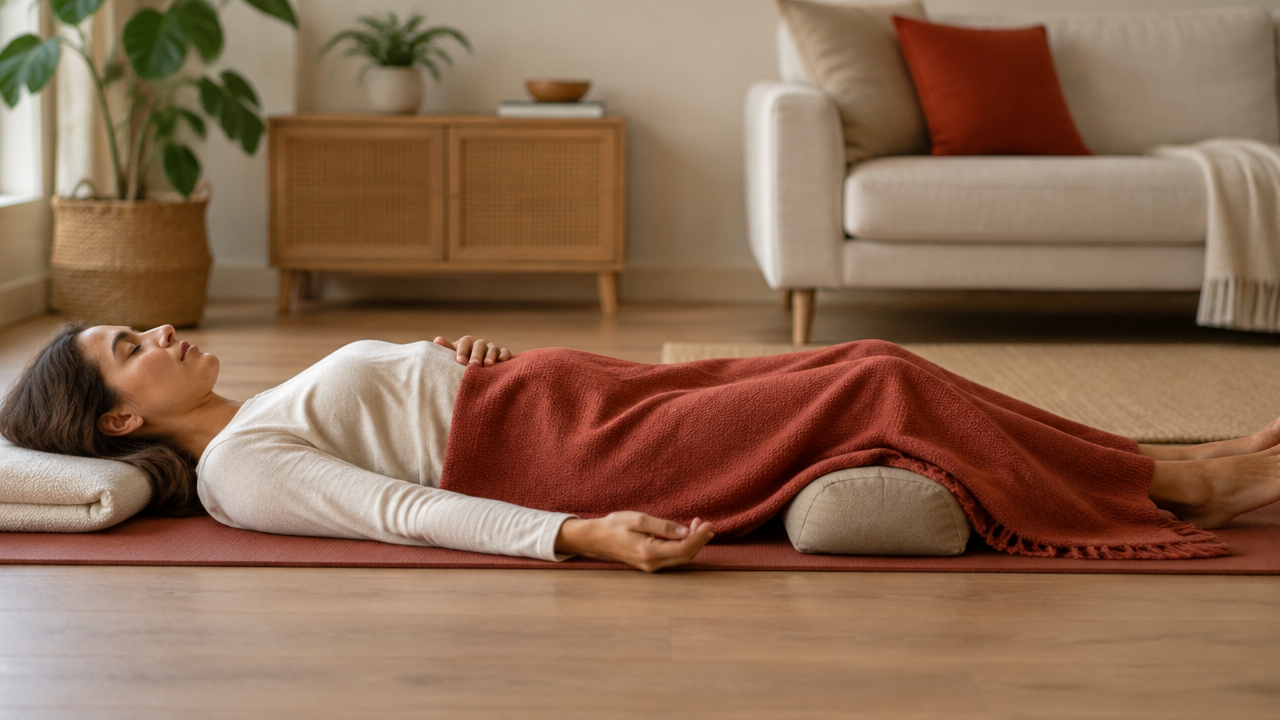
- Settle in: Lie on your back or choose another supported position. Adjust blankets, cushions, or clothing before starting.
- Notice your intention: Some guides invite a short, personally meaningful resolve, sometimes called a sankalpa. It is optional, and it need not be a grand goal.
- Move attention through the body: The guide may name different areas in sequence. You can listen without needing to create a strong sensation.
- Follow the breath and other cues: You may notice breathing, contrasting sensations, or simple imagery. Let the instructions pass rather than forcing an outcome.
- Return gradually: The guide usually brings attention back to the room and invites small movements before you get up.
For a first session, choose a recording with a voice and pace that feel comfortable. If lying still is difficult, use a chair or adjust your position. The aim is participation through awareness, not perfect stillness.
Can Yoga Nidra help with stress or sleep?
It may help some people feel more settled, but the strength of evidence depends on the outcome being studied. A 2026 systematic review of Yoga Nidra for sleep disturbances found only five unique studies across its analyses and judged the evidence very uncertain because of small samples, study limitations, and inconsistent methods. Its findings are preliminary, not proof that the practice treats insomnia. The review’s assessment of sleep research makes that distinction clear.
A separate review published in 2025 examined Yoga Nidra research on stress, anxiety, and depression. It included varied study designs and noted limitations in research quality and consistency, so its positive findings should also be interpreted cautiously. Read the review of mental health studies as a reason for further research, not a guarantee of results.
In everyday terms, a session can create a pause between tension and response. Afterward, you might choose one useful next step, such as asking for help, taking a short walk, or responding to someone more thoughtfully. That is a practical way to connect inner rest with calmer action under stress.
How can you try it safely at home?
Start with a short, beginner-friendly recording and a comfortable place where you can rest without being interrupted. You do not need special equipment or flexibility. Before pressing play, decide whether your aim is to unwind, practice awareness, or prepare for sleep, since that can help you choose a suitable time and position.
- Support your knees or head if that makes resting easier.
- Keep a light layer nearby so you do not become distracted by feeling cold.
- Let breathing stay natural. Do not force deep breaths or hold them.
- If you fall asleep, wake up unsettled, or feel uncomfortable, respond gently rather than treating it as failure.
- Afterward, take a moment to notice how you feel before returning to activity.
If you included a resolve, you might translate it into one small action rather than treating it as a wish for instant change. For example, “I will listen carefully” could become a focused conversation today. A simple practice of conscious intention works best when it connects reflection to behavior.
How is Yoga Nidra different from meditation or sleep?
Yoga Nidra is one form of guided meditative practice, not a replacement for every other kind of meditation or for sleep itself. Compared with a seated practice, it commonly involves lying down and following a spoken sequence. Compared with sleep, it invites you to keep some awareness of the guide, though drowsiness can happen.
There is no universal ranking of which practice is better. Someone who finds seated meditation uncomfortable may prefer lying down; someone who tends to fall asleep may prefer sitting upright or choosing another approach. The most useful practice is one you can approach comfortably and adapt to your circumstances.
What are the possible drawbacks?
For many people, a session is a low-effort way to rest, but inward attention is not comfortable for everyone. A guided body scan or quiet room may bring up restlessness, difficult feelings, or unwanted memories. You can stop, open your eyes, sit up, or switch to an activity that helps you feel present.
The National Center for Complementary and Integrative Health notes that meditation practices are generally considered low risk, while also describing negative experiences reported in research on meditation overall. Those findings are not specific to Yoga Nidra, and they underline why you should choose a pace and format that feel manageable. Its meditation safety overview also advises against using meditation to delay conventional care.
If sleep problems, anxiety, or distress persist, consider discussing them with a qualified health professional. A relaxation recording can complement appropriate support, but it cannot diagnose or treat an underlying condition.
Frequently asked questions
What is Yoga Nidra supposed to do?
Yoga Nidra is meant to guide you into deep physical relaxation while keeping some awareness of the guide’s instructions. People use it to pause, settle attention, and support rest. It is not a guaranteed way to fall asleep, treat insomnia, or produce a particular brain state.
Is Yoga Nidra better than meditation?
Neither practice is universally better. Yoga Nidra usually guides you through resting, sensing the body, and following spoken cues, often while lying down. Other meditation practices may involve sitting, observing thoughts, or focusing on the breath. Choose based on what supports your needs and feels comfortable.
What happens if you fall asleep during Yoga Nidra?
Falling asleep is common, especially when you are tired or practicing in bed. It does not mean you have failed, but you may miss parts of the guided practice. If you want to stay more alert, try practicing earlier, use a supportive seated position, or keep the room slightly brighter.
How often should you practice Yoga Nidra?
There is no established daily quota. You can try one short session and notice how you feel afterward, then practice again when it seems useful. Consistency may help you learn the routine, but longer or more frequent sessions are not automatically better, and Yoga Nidra is not a substitute for needed care.
Who should avoid Yoga Nidra?
Yoga Nidra is not known to be unsuitable for everyone, but the experience can feel uncomfortable for some people. If focusing inward brings up distress, pause, open your eyes, or choose a guided practice that offers grounding options. Seek qualified support if reactions persist or affect daily life.